The phrase can refer to gaming machines, a casino venue or an online brand, so context matters when assessing access and promotional claims.
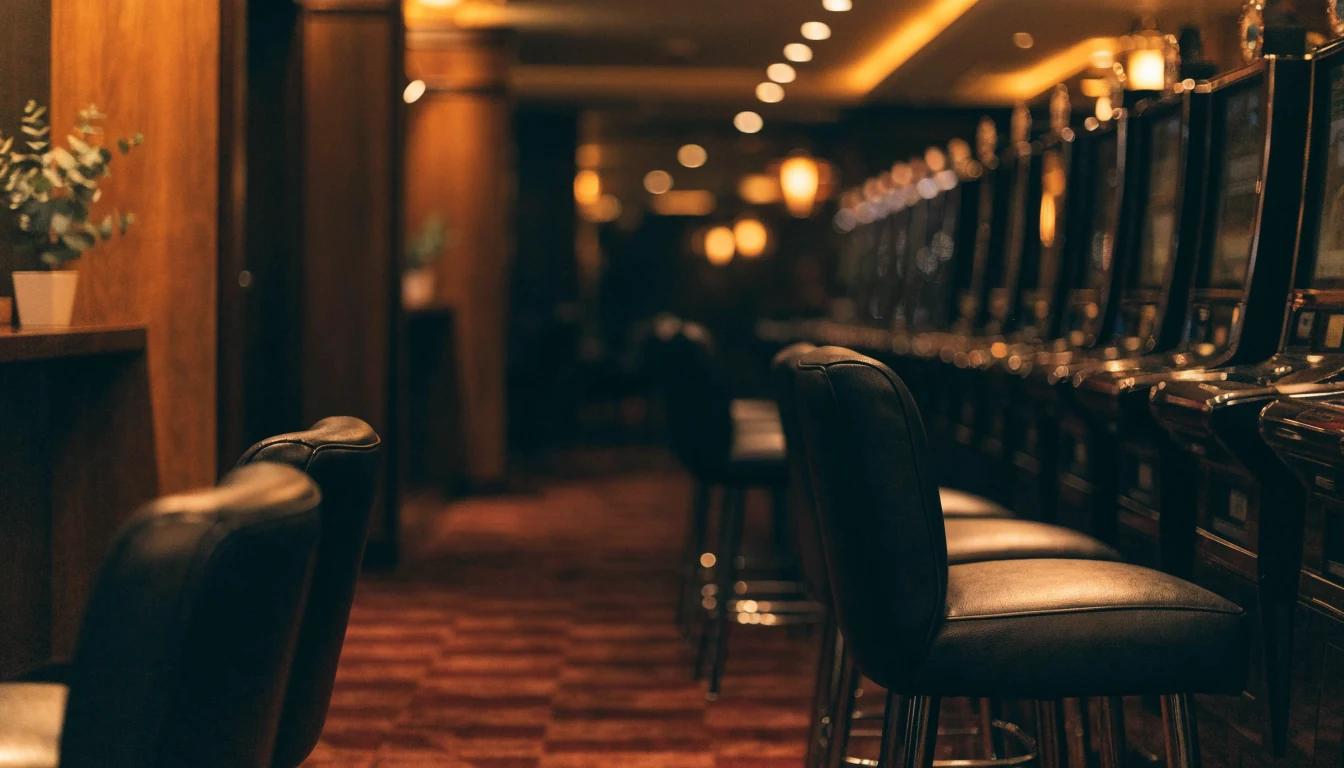
In Australia, “pokies parlour” can sound like the name of a particular kind of venue. In practice, it is an informal phrase, not a clear national category of casino. People may use it to mean a place with gaming machines, or simply as a loose way to refer to a casino. The wording alone does not tell you what sort of venue is meant.
A physical casino is a real venue operating under a licence issued by the state or territory where it is located. That local licensing arrangement matters: casino regulation in Australia is handled at state and territory level, rather than through one licence that covers the whole country. So when you hear someone describe a “parlour casino”, the useful question is what actual venue they mean and where it operates. The label is less precise than the setting.
The same words can appear on websites, where “parlour” may be part of a brand or a description. That does not turn an online service into a physical Australian casino. Nor does a familiar-sounding name establish that an online casino is authorised to serve people in Australia. Under the Interactive Gambling Act 2001, it is illegal for operators to provide real-money online casino games to people physically located here. Online casino-style games, including slots and table games, fall within that prohibition. A website’s wording and a venue’s local licence are different things.
Choosing a pokies parlour casino in Australia means weighing practical details against the information available about each option. Use these short verdicts as a starting point, and check the terms that matter to you before signing up.
Rollero Casino
Rollero Casino lists a Curacao Gaming Control Board licence, OGL/2023/176/0095, held by Hollycorn N.V. That licence is the key verified detail available here.
Playfina Casino
Playfina Casino is associated with Hollycorn N.V. and has operated since 2017 under Curacao eGaming. Its minimum deposit is A$20–30, depending on the offer.
7Bit Casino
7Bit Casino is operated by Dama N.V. and is licensed in Curacao. Those are the available details to consider when assessing it.
Golden Pokies
Golden Pokies is listed as a Curacao-licensed casino. No further operator details are available here, so check its terms directly if you need more information.
WinSpirit Casino
WinSpirit Casino lists a Curacao eGaming licence, OGL/2024/923/0383, held by Antillephone N.V. The stated minimum deposit is A$30.
MrPacho
MrPacho lists a A$30 minimum deposit. Its stated payout times are 30–120 minutes for crypto and 24–72 hours for fiat.
Wild Tokyo
Wild Tokyo is licensed in Curacao and has a A$10 minimum deposit. Its stated payout times are 30–60 minutes for crypto and 1–5 days for fiat.
Ricky Casino
Ricky Casino lists a A$20 minimum deposit, with A$30 required to qualify for the bonus. Its stated payout times are under an hour for crypto and 1–3 business days for PayID.
Kingmaker
Kingmaker lists a A$30 minimum deposit. Its stated payout times are about 90 minutes for crypto and 1–5 days for fiat.
DragonSlots Casino
DragonSlots Casino is listed under a Curacao Gaming Authority licence held by Jumpman Gaming Ltd. The licence and operator are the available verified details.
That distinction is easy to lose when a phrase combines familiar local language with “casino”. I would read it as a description to clarify, not a promise about what is being offered. If it points to a building, you are dealing with a physical gaming venue and its local rules. If it points to a website offering real-money casino play, the familiar wording does not change the federal law. The two uses may look similar on a screen; legally and practically, they are not interchangeable.
The scale of the land-based casino sector gives the phrase its Australian context. A specialist gambling-sector review puts the number of full-scale casinos above twenty and describes them as spread across all eight state and territory jurisdictions. That is a broad snapshot, not a permanent register: properties and regulatory arrangements can change. Still, it helps show why “casino” here does not refer to one national chain or one uniform type of venue. Each property sits within the rules of its own jurisdiction.
The same review counts gambling facilities across 147 Australian cities and identifies Sydney as the country’s largest gambling city, with 11 facilities. Those figures describe a wider gambling footprint, not a count of casinos alone. A facility count can include different kinds of venues, so it would be a mistake to read every facility as a full-scale casino or a dedicated pokies parlour. The distinction sounds obvious until a directory groups them together.
 Real Money Pokies on Android in Australia: Access GuideLearn how offshore casino access works through Android browsers and PWAs, how free pokies apps differ, and what to check before playing.…
 Casino Apps for Android in Australia: How Access WorksLearn how browser-based casino access works on Android and what to check with app installs, bonuses, payments and play before signing up.
Australia’s casino sector is therefore both sizeable and locally governed. A venue in one state is not simply interchangeable with a venue in another, and broad labels can hide differences in what a place is and how it operates. For someone trying to understand the phrase, the practical starting point is modest: “pokies parlour” is not, by itself, a reliable definition of a venue, a licence, or an online service.
I would keep three ideas separate. First, the phrase may be casual shorthand for a physical place, rather than an official venue category. Second, Australian casinos are land-based properties licensed in their respective jurisdictions. Third, similar wording on a website says nothing about whether that website can lawfully provide real-money online casino games to Australians. Treating those as separate questions makes the wording much less confusing.
That is the local meaning behind a phrase like “pokies parlour casino Australia”: it can point toward Australia’s physical casino sector, but the words themselves do not identify a particular venue or make an online service equivalent to one. Start with the real-world property and its jurisdiction, rather than assuming the label settles the matter. The label is only a label.
If you’re trying to pin down a physical casino rather than a venue described loosely as a “pokies parlour”, start with the place name and street address. Australian venues are spread across very different settings: a casino may sit in a city centre, on a resort precinct or in a regional town. The name alone is not always enough to work out where you’re going.
Lasseters Casino is at 93 Barrett Drive in Alice Springs, Northern Territory, postcode 0870. That gives you a specific address to put into your route planner; “Alice Springs casino” is a less useful instruction once you’re making the trip. On the Gold Coast, Jupiters Gold Coast Casino & Hotel is on Broadbeach Island. The listed location for Country Club Casino is Country Club Avenue, Prospect, in Meander Valley. Check the full address against the venue’s own current directions before setting off, particularly when the listing uses a suburb or locality that may not be familiar to you.
For major Australian casinos, plan on being at least 18 and carrying valid photo identification. The age threshold applies nationwide, and ID is a practical part of getting through the door, not an optional extra to remember after you arrive. If you’re travelling with someone younger, don’t assume that the casino floor and the rest of a larger property have the same entry rules. Access to restaurants or other entertainment areas is a separate matter from casino entry.
 Pokies Open Near Me in Australia: Hours and AccessLearn how casino hours differ from access to specific services, and why pubs and clubs have separate schedules; check official notices or…
 Australian Mobile Casinos: How Phone Play WorksMost access is through a mobile browser, using the same account as on desktop. Learn about PWAs, deposits, bonus terms and cashouts.
Opening hours are straightforward at the broad level: all major Australian casinos operate around the clock. That tells you the casino is not limited to a conventional daytime visit, but it does not mean every service within a property runs continuously. Hotels, restaurants and other facilities can have their own schedules. For a specific plan, check the relevant venue’s current information rather than treating “open 24 hours” as a promise about every part of the complex.
It’s also worth separating the venue’s address from the details of your visit. An address helps you find the building; it does not, on its own, tell you what identification will be accepted, whether a particular area has separate access arrangements, or which facilities are open at the moment you arrive. I’d check those details directly with the property before travelling, especially if you’re making a long trip or visiting with a group.
A small point that saves confusion: use the full venue name when checking directions. Several properties combine a casino with a hotel or broader entertainment precinct, and a short label can point you to the wrong entrance or simply provide too little detail. For the three examples above, the useful starting points are Barrett Drive in Alice Springs, Broadbeach Island on the Gold Coast, and Country Club Avenue in Prospect, Meander Valley.
Keep the basics in hand: the venue’s location, valid photo ID, and confirmation of any facility-specific arrangements. That is enough to plan the practical side without assuming that every Australian casino has an identical layout or entry process.
A review can sound confident and still leave out the detail that matters: what, exactly, is being reviewed? In Australia, a physical casino operates under a licence issued by the state or territory where the property is located. That local arrangement is the starting point for checking claims about a real venue.
In Australia, physical casinos operate under licenses issued by the specific state or territory where the property is located.
I’d read a review with the venue’s identity and location in mind, rather than treating “pokies parlour” as a precise legal label. The phrase can be used loosely. A writer may be discussing a physical casino, describing a website, or using familiar wording without making clear which one they mean. Those are not interchangeable. A review that blurs them makes it harder for you to tell what its claims actually apply to.
For a physical venue, look for a clear connection between the property and its relevant jurisdiction. Does the review identify a real place, or does it lean on broad language that could describe almost anything? Does it make a licensing claim that can be understood in relation to the state or territory where the venue operates? If the location and the licensing context are missing, treat the review as incomplete rather than filling in the gaps yourself.
That does not mean every review has to read like a legal document. It does mean its specific claims should be possible to assess. A confident statement about a casino’s status is not proof on its own. The useful question is whether the claim corresponds to the local licensing arrangement for that property—not whether the page looks polished, uses Australian slang, or repeats the word “licensed”.
I also separate first-hand description from regulatory claims. A reviewer may describe what they saw or how they found a venue; that account is not the same as evidence of the property’s licence. Likewise, a page can use local language while saying nothing reliable about the venue’s regulatory position. Don’t let a familiar tone do the checking for you.
The distinction matters even more when a review shifts from a physical place to an online service. Australia’s state and territory casino licences apply to properties within those jurisdictions; their existence should not be read as approval for real-money online casino services. The Interactive Gambling Act 2001 prohibits operators from providing real-money online casino games to people in Australia. A website’s review, branding, or mention of a venue does not change that legal position.
So when a page calls itself a pokies parlour review, I look for the subject behind the label, then ask whether its claims fit the relevant local licensing context. If it moves between a venue and a website without saying so, or makes sweeping claims without identifying the jurisdiction, I keep my confidence low. That’s not cynicism; it’s basic housekeeping.
A sound review helps you understand what is being described and keeps its claims within that scope. It does not ask you to treat promotional language as proof. And if the central claim cannot be tied to a physical property and its state or territory, the safest reading is simple: the review has not established what it says.
A sign-up bonus can sound like a simple welcome: create an account, make a deposit, receive an extra benefit. A no-deposit version may sound even easier because the headline suggests no payment is needed to start. But those phrases describe promotional claims, not proof that an online casino may lawfully offer its service to people in Australia.
Legal Prohibition
Under the Interactive Gambling Act 2001, it is illegal for operators to provide real-money online casino games to people physically located in Australia.
The legal distinction matters. Under the Interactive Gambling Act 2001, operators cannot provide real-money online casino games to people physically located in Australia. That includes casino-style services such as slots, poker and table games. A sign-up offer attached to such a service does not make it lawful. Nor does calling it a “pokies parlour” change the nature of the service being offered.
So if you come across a deposit offer or a supposedly free sign-up benefit, read the headline as a claim made by the site—not as confirmation that the offer is permitted here. A promotion may be visible on a page aimed at Australians while still relating to a service operators are prohibited from providing to people in the country. The wording can be polished; the legal position does not change with the wording.
“Bonus” is not one precise set of terms. A sign-up claim may be tied to opening an account, depositing funds, or meeting other conditions set by the operator. A no-deposit claim may suggest that the user can receive something without first paying in. Those labels alone do not tell you what the full conditions are, whether the benefit can be withdrawn, or what a person would have to do next.
That uncertainty is reason to treat the claim carefully, not to assume a hidden detail one way or the other. Read any terms presented alongside it, and be alert to wording that makes a promotion sound like a gift while placing conditions elsewhere. But even clear terms would answer only what the operator says the promotion involves. They would not establish that offering the underlying online casino service to Australians is legal.
This is where the deposit headline can distract. You might focus on whether an offer requires an initial payment, while the more basic question is whether the service itself is allowed to be provided to people in Australia. A no-deposit label does not create an exception to the law. Neither does a sign-up bonus framed as a reward for registering.
The Australian Communications and Media Authority, usually shortened to ACMA, oversees compliance with federal interactive-gambling laws and enforces the Interactive Gambling Act. It can ask Australian internet providers to restrict access to websites that provide prohibited interactive gambling services or advertise them in Australia.
ACMA’s enforcement record gives some context to why a promotion’s presence online should not be mistaken for approval. Following enforcement action, it has blocked more than 1,455 illegal gambling and affiliate websites since November 2019. A blocked site, an offer page, or promotional wording is not an endorsement from the regulator.
There are also differing published counts for services that have withdrawn from the Australian market since ACMA began enforcing the rules in 2017: one count says more than 210, while another says over 190. The broader point is that enforcement has led services to withdraw as well as websites being blocked.
When a page advertises a deposit bonus or a no-deposit sign-up offer, separate three things: what the headline promises, what the terms actually say, and whether the operator is permitted to provide the service to Australians. The first two are the site’s own claims. They do not answer the third.
I would not treat familiar branding, a detailed promotion page, or confident language about a welcome offer as evidence of Australian approval. A claim can be easy to understand and still belong to a prohibited service. That is the point worth keeping in view before spending time on its conditions.
No deposit required may sound like a small distinction. Legally, it is not the distinction that decides whether an online casino offer can be made to Australians.
When you see a page describing a pokies parlour as available online, separate the wording from the place it might bring to mind. A physical gaming venue and a website are not the same thing. A familiar venue name, Australian-themed language or a page that looks local does not turn an online service into a physical casino.
There is also an important legal difference. Under the Interactive Gambling Act 2001, operators cannot provide real-money online casino services to people in Australia. That includes casino-style services involving slots, poker and table games. The law concerns what an operator provides to people physically located here; a label on a webpage does not change that.
I treat “play online” and “play free” as descriptions that need context, not as proof of what a service is. The word “free” might be used loosely in promotional copy, or it might refer to something different from real-money play. By itself, it does not tell you whether an account is required, whether money can be deposited, whether winnings can be withdrawn, or what activity is actually available. Those details matter, but the wording alone cannot settle them.
Nor does “free” make an online casino service lawful by definition. The legal position depends on the service being provided, not simply on whether a page uses a no-cost label. I would not assume that a free-play claim is a safe or authorised route into real-money gambling. A page can use reassuring language while leaving the essential terms unclear.
The reverse mistake is easy too: a website may load, show account activity or accept registrations, yet none of those things establishes that it is an Australian-licensed online casino. In this market, access is not a licensing test. A working page is evidence only that the page can be reached at that moment. Account traffic tells you that people are interacting with it, not that the service is permitted under Australian law.
That distinction is especially useful when a site borrows the language of a local parlour. A name that sounds like a venue, a map-like layout or an Australian-facing page can blur the line between a real place and an online service. Keep the categories separate: venue information concerns an actual location; online casino wording concerns a service delivered over the internet. One does not validate the other.
If a page mixes free-play claims with deposits or real-money account features, read the claims as separate statements. Do not let “free” act as a blanket explanation for everything else on the page. Likewise, a page that uses “online” does not establish that a corresponding physical venue offers the same service, or that the service is legal for people in Australia.
Attention A website that loads or accepts registrations does not establish that it is an Australian-licensed online casino.
I would be careful not to infer more than the words support. “Play” could refer to a venue visit, an online service, or merely a phrase in an advertisement. “Free” does not answer what happens after the initial offer, and “online” does not answer whether an operator may legally provide the service here. The decisive point is not how polished the page looks or how easily it opens; it is the nature of the service and the rules that apply in Australia.
So, when these terms appear together, read them literally but not credulously. They describe how a page presents itself. They do not establish a lawful online casino, a physical parlour, or a particular kind of free access. The wording is not the permission.
Words such as “free chips,” “free spins” and “free play” can make a page sound low-risk. They do not tell you what is actually being offered, who can access it, or what rules apply. I treat them as advertising claims, not as proof that a free offer is available to people in Australia.
The wording can cover different things. A page might use “free” to describe a demonstration, a promotional feature, or a reward connected to an account. Those are not interchangeable. Nor does the label explain whether the activity involves online casino-style games, whether anything of value can be won, or what conditions sit behind the headline. If the page does not make those points clear, the claim has not done much explaining.
That matters here because the Australian rules are not the same as a general invitation to play online. The Interactive Gambling Act 2001 prohibits operators from providing real-money online casino games to people physically in Australia. Casino-style games such as slots, poker and table games fall within that prohibition when supplied as interactive gambling services. A “free” label does not establish that a service is lawful, locally licensed, or suitable for Australian users.
I would read the wording around a free-play claim closely, without treating that as a reason to register or take part. Look for what the page says the offer consists of, whether it is limited to a particular activity, and whether its terms are accessible and consistent with the headline. If the explanation is missing, contradictory or buried behind an account step, that is a reason to remain sceptical—not a puzzle you need to solve by handing over personal details.
The same goes for claims that appear beside a familiar venue name or local-sounding language. A physical casino and an online page are different things. A reference to a parlour, chips or spins does not connect a website to a licensed Australian gaming venue, and it does not convert an online casino offer into a lawful local service.
I have learned not to let the word “free” do the thinking. It can distract from the basic questions: what is being claimed, which service is behind it, and whether the claim is relevant to someone in Australia? A page being accessible, receiving account traffic, or appearing under another web address answers none of those questions. A working link is not a regulatory status.
Look for what the page says the offer consists of, whether it is limited to a particular activity, and whether its terms are accessible and consistent with the headline. If the explanation is buried behind an account registration step, remain sceptical.
So if you see free chips or spins promoted as a simple perk, pause at the wording. Treat the offer as something the advertiser asserts, not something established by the headline. If the page leaves you unable to tell what “free” means or what service it relates to, you have enough information to withhold trust. No need to chase the fine print into a registration flow.
A bonus attached to a “pokies parlour” name can sound like a perk at a local venue. The wording alone does not tell you whether it refers to a physical casino, an online service, or simply a promotional claim. I’d separate those things before giving the offer any weight.
For a physical casino, a bonus claim should be tied to a named venue and its own published terms. Check what the promotion actually applies to, who can access it, and whether the conditions are clear. A vague promise attached to a parlour label is not enough to establish that a real venue is offering it. Nor should you assume the offer applies at every casino or gaming venue.
Online is a different matter. Under the Interactive Gambling Act 2001, operators cannot provide real-money online casino games to people in Australia. That includes casino-style games such as slots, poker and table games. A website displaying a bonus, taking account traffic or loading under another address does not establish that it is an Australian-licensed online casino. A polished promotion is still just a claim.
That distinction matters because bonus language can blur the boundary between a local venue and an online service. Look for the actual provider and the setting the offer describes; don’t let a familiar-sounding name do that work for you. If the terms direct you to an online casino promotion, treat the claim in light of the Australian law, not the site’s presentation.
Read the wording closely, too. Is the claimed benefit explained in plain terms? Are the conditions visible before you are asked to register or provide details? Does the page identify who is making the claim? If those basics are missing, there is little reason to trust the headline. And if the offer depends on a real-money online casino service for Australians, attractive wording does not change the legal position.
I wouldn’t treat “bonus” as evidence of value, legitimacy or local approval. It is a label, not a guarantee—and it does not turn an online casino into a lawful Australian service. Keep the claim separate from the venue name, and don’t infer that a promotion is available simply because a page says so.
A small label. Big difference.
“VIP parlour” sounds like a defined feature, but the wording alone tells you very little. It might describe a room, a membership tier, a host service or simply be promotional language. I wouldn’t treat the label as proof that a venue has a separate VIP gaming area, or that a particular benefit comes with access.
Casino entry across Australia is restricted to adults aged 18 and over nationwide.
Start with the exact claim. Does it name a physical space, explain who can enter, or set out what “VIP” means? A page that uses the term without describing the feature leaves the important part unanswered. Look for details tied to the venue itself, rather than assuming the phrase has one standard meaning across Australia.
The entry rule is clear: casino entry is restricted to adults aged 18 and over nationwide. That does not, by itself, establish separate age rules, membership conditions or privileges for a VIP area. Those need to be stated by the venue, not inferred from a label.
I’d also keep three things separate: a VIP-sounding page, a venue’s confirmed facilities and a promise of special treatment. One does not automatically prove the others. If a claim is vague, ask the venue directly what it refers to and whether the information is current. A polished label is easy to publish. Specifics matter more.
When people talk about pokies in a casino parlour, they mean physical gaming machines on a venue floor—not a separate kind of online service. The useful point is scale: the total number of machines endorsed on venue licences and installed in casinos across Australia is 3,308.
That figure gives you a national snapshot, not a promise about what you will find at any one property. Casino floors differ, and the total does not tell you how machines are arranged, which areas are open to visitors, or what is available at a particular venue. I would treat “parlour” as a loose way to describe a casino gaming area, rather than assume it names a standard room or setup.
The licence figure matters because it ties the count to machines installed in casinos, rather than every gaming machine in the country. It is not a count of online games, and it does not establish that every Australian casino has an identical selection or layout. A venue’s own current information is the sensible place to confirm details before making plans.
For a quick reality check, keep the distinction simple: this is about machines physically installed at casino venues. The national total helps put the scale in perspective, but it cannot tell you what a particular floor looks like. One number, limited reach.
A site loading on your phone, or appearing at a different web address, does not show that it is authorised to offer real-money casino games in Australia. The Interactive Gambling Act 2001 prohibits operators from providing online casino games to people located here. A new domain changes the address, not that legal position.
ACMA, the Australian Communications and Media Authority, enforces federal interactive gambling laws. Its enforcement records include website-blocking action against illegal gambling services, including alternate domains associated with Fair Go. ACMA can ask Australian internet service providers to block access to sites providing prohibited services or advertising them. Its published record says more than 1,455 illegal gambling and affiliate websites have been blocked since November 2019.
Blocking can affect whether a particular address resolves through an Australian internet provider. Addresses may change over time, so a page that does not load at one address might appear elsewhere. That technical change is not evidence that the service has become lawful or that it holds an Australian licence. Nor does a working payment page, an account prompt or a polished local-looking design settle the question.
I treat domain changes as a reason to be cautious, not as a workaround to follow. The relevant distinction is between a site being reachable and an operator being legally permitted to provide the service to people in Australia. Those are not the same thing.
ACMA’s enforcement record also reports that more than 210 illegal services withdrew from the Australian market after enforcement began in 2017; another reported figure says more than 190. The published totals differ, so neither should be mistaken for a precise, settled count. The practical point is clearer: blocking and enforcement are active, and an alternate address does not erase them.