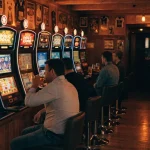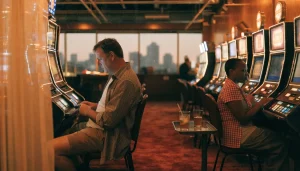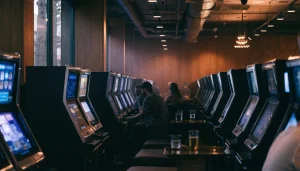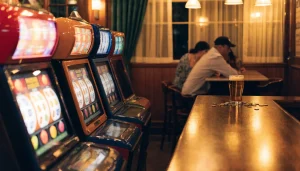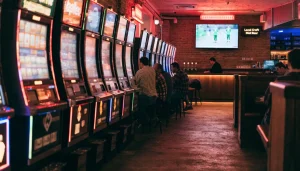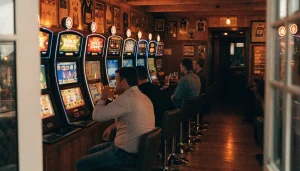
A practical look at venue hours, travel checks and what search listings can—and can’t—confirm about pokies in Tasmania.
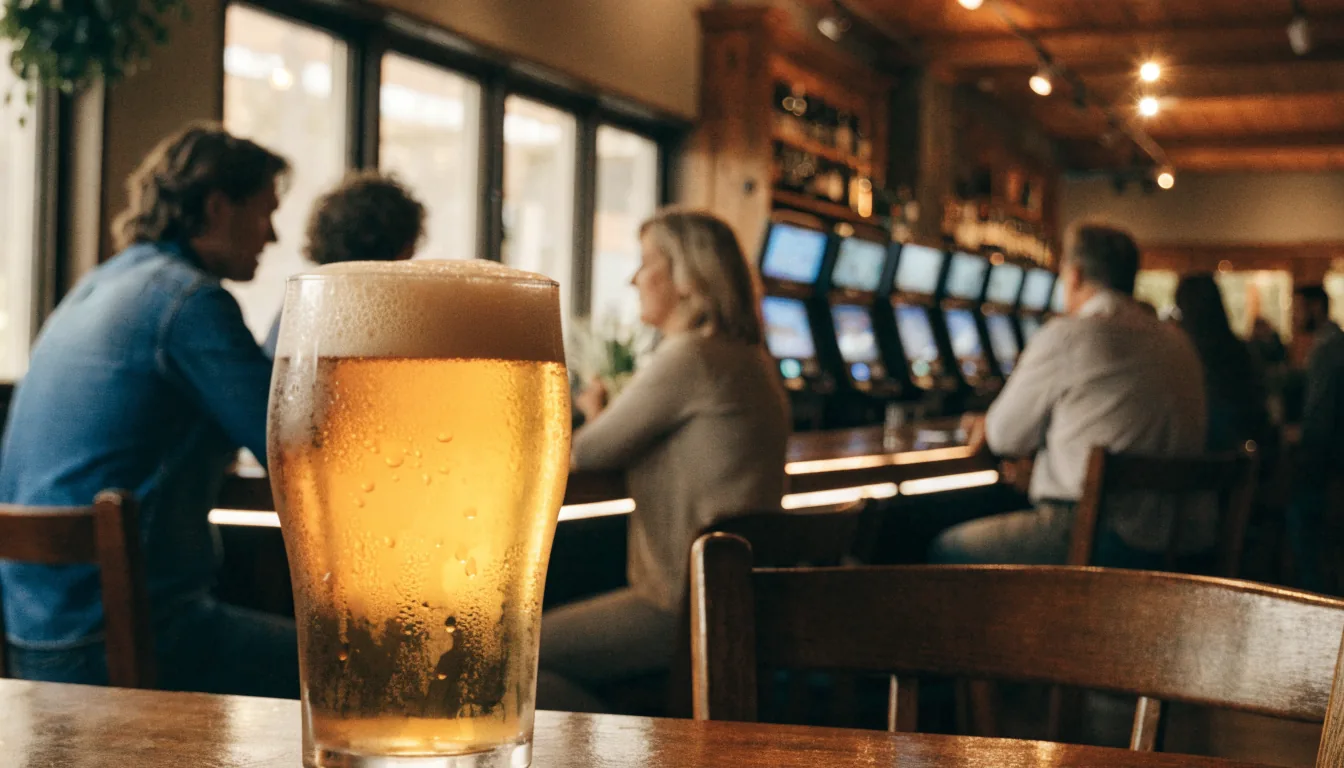
A venue can be open without its pokies being available. That sounds obvious, but it is an easy detail to miss when you are checking plans on your phone. “Open” might refer to a bar, dining area or another part of the premises; it does not necessarily confirm that the gaming area is operating at the time you intend to visit.
I would check two things separately before leaving: whether the venue itself is open, and whether its pokies are operating. Treat those as separate questions when you look online or make a call. A listing that shows a venue as open may not answer the second one.
Start with the venue’s official website or its own social media page. Look for current information about opening and any notice that could affect your visit, such as a temporary closure or a change to normal arrangements. Make sure the page is actually for the venue you mean. Similar names, old pages and listings created by other users can muddy the waters.
Pay attention to the date of any post or notice. A page can still appear in search results after the details have changed, and a general weekly schedule may not reflect a one-off change. If the information is undated, unclear or inconsistent across pages, do not treat it as confirmation.
Then look for wording that specifically covers the gaming area or pokies. If the venue’s information only says that the premises are open, you still have not confirmed that the machines will be operating. You do not need to guess what the venue means; ask directly.
A quick call is often the simplest way to clear up a vague listing. Ask whether the venue is open at the time you plan to arrive and whether its pokies will be operating then. If you are heading out early or late, state the time plainly rather than asking only whether the venue is “open now”. The person answering can confirm the detail you actually need.
If the call goes unanswered, try the venue’s official online channels again and check for a recent notice. A missed call does not prove the venue is closed, just as a search listing marked “open” does not prove the gaming area is running. If you cannot confirm, decide whether the trip is worth making without that answer.
Keep the question narrow. You are checking current access, not asking for a recommendation or a promise about what will be available once you arrive. If you have a particular date in mind, give that date as well as the time. That helps avoid relying on a routine schedule when a special arrangement might apply.
Map and directory listings can be useful for finding contact details and a starting point for your check. They are less useful as the final word when the listing does not say what is open. The status shown on a screen may not distinguish between the venue and its gaming area, and it may not reflect a recent change.
Attention: Map and directory listings may not distinguish between a venue and its gaming area, and may not reflect recent changes.
Check that the phone number and link lead to the venue itself. If a listing sends you to a general directory, an old page or an unrelated business with a similar name, go back and look for an official channel. I would rather spend a minute confirming the right place than set off on a guess.
The same care applies to a result that includes “Crown” or another familiar name. Do not assume the wording identifies a Tasmanian venue or confirms that pokies are available there. Check the exact venue name and its own current information before making plans.
Use a short check, then make the decision:
This matters most when the trip depends on the gaming area being available. If you are already going to the venue for another reason, uncertainty may matter less; if pokies are the whole point of the outing, confirm before you set out. No heroic detective work required. Just two clear answers.
Choosing pokies in Tasmania for 2026 means finding an option that fits your preferences and gives you clear details to check before you play. Use these short verdicts as a starting point for your own research.
Rollero Casino
Rollero Casino is listed with a Curacao Gaming Control Board licence, OGL/2023/176/0095, held by Hollycorn N.V. Check the licence details as part of your research.
Playfina Casino
Playfina Casino is associated with Curacao eGaming and Hollycorn N.V., which has operated it since 2017. Its minimum deposit is A$20–30, depending on the offer.
7Bit Casino
7Bit Casino is listed as operating under a Curacao licence and is operated by Dama N.V. Those details give you a starting point for checking its regulatory information.
Golden Pokies
Golden Pokies is listed with a Curacao licence. The available information is limited to that licensing detail, so check the casino directly for other details you need.
WinSpirit Casino
WinSpirit Casino is listed with Curacao eGaming licence OGL/2024/923/0383, issued to Antillephone N.V. Its stated minimum deposit is A$30.
MrPacho
MrPacho lists crypto payouts at 30–120 minutes and fiat payouts at 24–72 hours. Its minimum deposit is A$30.
Wild Tokyo
Wild Tokyo is listed with a Curacao licence and a minimum deposit of A$10. Its stated payout times are 30–60 minutes for crypto and 1–5 days for fiat.
Ricky Casino
Ricky Casino lists crypto payouts in under an hour and PayID payouts in 1–3 business days. The minimum deposit is A$20, or A$30 to qualify for the bonus.
Kingmaker
Kingmaker lists crypto payouts at about 90 minutes and fiat payouts at 1–5 days. Its minimum deposit is A$30.
DragonSlots Casino
DragonSlots Casino is listed with a Curacao Gaming Authority licence, held by Jumpman Gaming Ltd. Check the licence details as part of your research.
“Best” can mean different things depending on what you want from a pokie. You might care about its theme, how its features work, or the return-to-player (RTP) information available for it. Those are different questions, and none can produce a reliable promise about what a particular session will pay.
That matters when you are comparing games associated with Tasmania. A name appearing in a venue listing or a search result does not tell you how its settings are configured, whether it is available at a particular location, or whether it will suit your preferences. Nor does the phrase “best paying” identify a dependable winner. A game’s reputation is not a forecast of your next result.
RTP describes the share of wagers a game is designed to return over a very large number of plays. It is a theoretical measure across repeated play, not a schedule for individual players. It cannot tell you what you will get back in one sitting, and it does not mean that a certain amount is due after a run of losses.
There is another complication: according to a specialist review, some game providers let casinos choose between multiple RTP settings for the same pokie. As a result, the same title may be configured with different return percentages at different casinos. Knowing a game’s name alone is not enough to establish which setting applies in a given place.
That is a reason to treat broad claims cautiously, not to assume that every casino changes settings or that a particular setting is available in Tasmania. If a venue or operator publishes game information, check that it refers to the exact title and setting you are looking at. If it does not make that clear, a number attached to the game elsewhere may not describe the version in front of you.
Each spin is generated separately by the game’s random number generator. In practical terms, an earlier win or loss does not make the next result more likely to go either way. A machine that has paid recently is not therefore “cold”, and a long losing stretch does not mean a win is due.
This is easy to lose sight of in the moment. A sequence can look like a pattern, especially when you are watching the same machine, but that impression does not give you a dependable way to predict the next outcome. Past results are not a guide to what the next spin will do.
For me, that is the cleanest test of any claim about a “best paying” pokie: does it describe a feature you can check, or does it imply that a past result can forecast a future one? The first may help you compare games. The second is not a sound basis for choosing one.
Each spin is generated separately by a random number generator, meaning past results are not a guide to what the next spin will do.
If you are weighing up pokies, start with the details that are available for the particular game rather than a blanket ranking. You can look at its rules, bonus features and any clearly stated RTP information, then decide whether those features appeal to you. Keep the limits in view: published information does not guarantee a result, and a title’s settings may differ between casinos.
A list labelled “best” can sound precise while hiding what it is ranking: popularity, design, advertised return information, or someone’s personal preference. Those are not interchangeable measures. Without a clear basis for the comparison, a numbered order can create confidence without giving you a useful way to judge the games.
So, if you are looking for the best pokies in Tasmania, treat “best” as a question about your own criteria, not a promise that one machine will pay more in your session. RTP can offer context when the setting is clearly identified; the random outcome of each spin remains just that. No shortcut there.
A location search can sound more definite than it is. “Near the airport” might mean a short walk, a drive, or simply somewhere in the wider area. “Near me” depends on the location your device is using. Before setting out, pin down the place you mean and check the route to the exact venue address—not just the name in a results list.
First decide whether you mean a venue inside the airport or one you could travel to after landing. Those are different plans. A result that appears alongside an airport search does not, by itself, establish that the venue is in the terminal or close enough to reach on foot.
I’d check the venue’s own address, then compare it with the airport on a map. Look at the route and travel mode you actually plan to use; a straight-line distance can be a poor guide to the trip. If the listing gives only a broad area or a pin without a clear address, treat that as a reason to confirm details before you leave, not as a reliable arrival plan.
The same goes if your flight is only one part of the journey. Allow yourself to identify the venue separately from the airport, rather than assuming that “Tasmania airport” describes one precise starting point.
For a CBD destination, use the particular city centre you have in mind and check the venue address against it. A result tagged “CBD” may be useful as a lead, but the label alone does not tell you how far away the venue is or whether the route suits your plans. This is especially worth checking if you are walking, carrying luggage or relying on a particular transport option.
“Near me” can be even less exact. Your phone may use its current location, while a search made earlier—or with location access turned off—may reflect somewhere else. Set the map to your actual starting point and inspect the route before you head out. A familiar-sounding place name is no substitute for the address.
A search mentioning Tasmania and “Vic” may mix two different destinations. Victoria is across Bass Strait from Tasmania; a result containing both place names does not establish that a venue is in Tasmania, or that it is close to a Tasmanian departure point. Check which state the address is in before planning the trip.
If you are travelling from Victoria, separate the crossing from the journey to the venue. Confirm the venue’s address on the Tasmanian side, then work out how you will get there from your actual arrival point. Don’t let a broad regional label do the work of a route plan. Small distinction, big detour.
For northern Tasmania, narrow the destination to the town or area you intend to visit, then confirm the address and route. “North Tasmania” is a broad description, not a useful final stop on its own. Once you know the exact place, you can judge whether it fits your itinerary rather than relying on a result’s wording.
When you visit a Tasmanian venue, look beyond the machines and notice how the place handles support and incidents. I wouldn’t treat a polished room or a friendly welcome as proof that its responsible-gambling arrangements are clear. Check whether staff can explain who to approach if gambling is becoming difficult, and whether they can point you to the relevant support information.
There is a specific staffing requirement for larger gaming-machine venues. A report by regionriverina.com.au says that, from 1 July, venues with more than 20 machines are required to have a dedicated responsible gambling officer (RGO) present while those machines are operating. The report also describes a one-month transition period for venues to remove signage and put the officer arrangements in place. That is a reported requirement and transition, not a reason to assume every venue has already completed the change.
If you want to understand how a venue is applying the requirement, ask staff whether an RGO is on duty and how you can speak to them. You don’t need to make a formal complaint to ask for help. A clear answer is useful; being passed from person to person is not.
The same report says venues are required to maintain a gambling incident register. It is intended to record events, including situations where a patron’s behaviour suggests they may be at risk of gambling harm or already affected by it. That means the venue should have a process for noting and responding to concerning incidents, rather than relying only on a staff member’s memory.
For a visitor, the practical check is simple: can staff tell you how to raise a concern, and do they respond as if it is part of their job? You are not expected to inspect the register or ask for private details about other patrons. The point is whether there is a recognisable procedure and someone who can explain it.
You can also ask what options are available if you want to take a break or stop playing. Deposit, loss and session-time limits, along with self-exclusion, are common responsible-gambling tools, but don’t assume every venue offers each one in the same way. Ask what applies on site and how to use it before you need it.
I’d keep the check conversational: ask who handles gambling-related concerns, whether the RGO is available if the venue is subject to that requirement, and how incidents are recorded. You should not have to guess which staff member to approach. No grand tour required.
A search about pokies on the Spirit of Tasmania and a search for online pokies are two different things. The first is about a ship; the second is about gambling over the internet. I wouldn’t treat one as evidence for the other. A name appearing beside “pokies” does not establish that machines are available on board, so check directly with the relevant service if that is what you need to know.
The same caution applies to searches combining “Crown” with Tasmania. A familiar casino name in a phrase does not confirm that a particular venue exists in Tasmania, or that it has pokies. Search wording can make those details look settled when they are not. Check the venue’s own current information before making plans.
Online real-money pokies are a separate matter, and the legal position in Australia is important. The Interactive Gambling Act 2001 makes it illegal for companies to provide real-money online casino games to people in Australia without a domestic licence. No Australian online casino licences have been issued, so there is no Australian-licensed online casino.
That does not mean every offshore site will refuse Australian customers. Some may accept them, and Australian players are not the target of the law. But an offshore site accepting you is not the same as an Australian licence or Australian protection. If it refuses to pay your winnings, you have no legal recourse in Australia to recover them. That is a serious difference, not fine print.
I’d be wary of treating a “no deposit” offer as a shortcut around that risk. An offer cannot change who operates the site or give you local recourse if a dispute arises. Read the terms carefully, but remember that understanding the terms is not the same as having an Australian authority able to enforce them.
Keep the searches separate in your head: a question about the Spirit of Tasmania needs confirmation from the service; a question about a Tasmanian casino needs confirmation from the venue; and an online offer from an offshore operator sits under Australia’s restrictions on providers. One phrase can bundle all three together. It doesn’t make them interchangeable.
For online play, the practical risk is straightforward: you may be able to access a site, but if the operator withholds a payout, Australian law does not give you a route to recover it. No local safety net.
A listing that says a venue is open does not, by itself, tell you whether its pokies are operating. These are two different details: the venue may be open for other services while gaming machines are switched off, or the machines may operate only during part of the venue’s opening period. Treat claims about all-night access as something to confirm, not as a safe assumption.
I wouldn’t infer a Tasmanian venue’s schedule from a general directory entry or a search result. A page can be out of date, and “open” can refer to the premises rather than the gaming area. Check the venue’s own current information for its opening hours and, if that still leaves doubt, ask specifically when the pokies are available. The distinction is small on a screen and rather less small after you arrive.
There is also a separate staffing requirement to keep in mind. A report by regionriverina.com.au says that, from 1 July, venues operating more than 20 gaming machines are required to have a dedicated responsible gambling officer (RGO) on duty while those machines are running. That requirement concerns the period of machine operation; it is not a statement of the venue’s opening hours, nor does it establish that a venue operates around the clock.
So an RGO being on duty should not be read as evidence that a venue is open at a particular time. Nor does a venue’s advertised opening schedule tell you, on its own, when its machines are running. The two questions need separate answers.
If you are comparing hours, look for wording that clearly refers to gaming-machine availability rather than general entry, dining or bar service. Where the listing gives only a broad opening time, it may not settle the question you actually have. A direct confirmation from the venue is more useful than assuming the machines follow the same schedule as the rest of the premises.
The same caution applies to claims of 24-hour pokies in Tasmania. A “24-hour” label needs to be clear about what stays open: the venue, a particular service, or the gaming machines themselves. Without that distinction, the label can sound more definite than it is. Don’t turn an all-hours search result into a promise of continuous machine access.
Keep the checks simple: confirm the venue’s hours, then confirm the pokies’ operating hours separately. The RGO rule is a staffing condition for certain venues while machines operate—not a timetable and not proof of round-the-clock availability. That’s the useful distinction.
“Pokies in Tasmania” is a broad description, not a catalogue. It doesn’t tell you which games are available, how many machines a particular venue has, or what any individual machine will pay. Those details are specific to a game and venue, so a general description of Tasmanian pokies cannot stand in for checking the machine itself.
That matters if you’re hoping to find a particular title or a machine with a certain feature. A game name, theme or familiar look may help you recognise what you’re after, but it doesn’t establish that the game is installed at a Tasmanian venue. I wouldn’t treat a broad claim about the state as proof of local availability.
The same goes for searches about maximum bets or the largest cash payout. There is no single figure that can safely be applied to every pokie in Tasmania. A maximum bet is a setting of the particular game, while payout conditions depend on its rules and configuration. If those details affect your decision, check the information displayed for that machine rather than relying on a general description or an old mention elsewhere.
A headline prize also isn’t a forecast. Each spin is an independent random event generated by a Random Number Generator; the previous result does not make a particular result due on the next spin. I keep that in mind when a game’s name or feature makes a big win sound close at hand. It isn’t.
“Best” can mean different things to different players, but the phrase alone doesn’t identify a dependable winner. Without confirmed details for the actual games and machines being considered, a list claiming to settle the question would be more confident than useful. The sensible starting point is to identify the specific detail you need—game availability, bet settings or payout rules—and verify it at the point where it applies.
A place name attached to a pokies search can be just as incomplete as a game name. Don’t assume that a result mentioning a Tasmanian locality proves that a particular venue or machine is there; establish the venue and its current details before making plans. Small distinction. Big difference.
So, treat general statements about Tasmania’s pokies as background only. They can orient you to the subject, but they cannot confirm a particular game, venue, machine setting or outcome. For a decision that depends on one of those details, look for information tied to that exact game or machine—and remember that no setting makes a spin predictable.
Looking for online pokies while you’re in Tasmania can blur two different things: what a search result offers and what companies are allowed to provide to people in Australia. The Interactive Gambling Act 2001 prohibits companies from offering real-money online pokies to Australian residents without a domestic licence. No domestic licences for online casinos have been issued, so there is no Australian-licensed online casino.
The law is directed at providers, not individual players. That does not make an offshore site a safe or dependable option. Access to illegal offshore gambling sites is blocked under Australian enforcement arrangements, and internet service providers must follow the blocklist. A site appearing in a result, or remaining reachable at a particular moment, is not proof that it is authorised to serve Australians.
The practical risk is plain: if an offshore casino refuses to pay your winnings, you have no legal recourse in Australia to recover them. You may also find that the protections people expect from a domestic gambling service simply do not apply. A polished website is not a substitute for local legal protection. Not close.
BetStop has an important limit too. It applies to Australian-licensed operators; it does not bind offshore sites. If you have self-excluded, do not assume that an offshore service will honour that choice or check the Australian register. BetStop is not a way to make an offshore casino safer, and it cannot provide the protections of a licence that does not exist.
Searches for a casino online in Tasmania, or for pokies near you that can be played online, can therefore return offers that are not lawful for a company to provide to Australian residents. Treat the result as advertising or a claim by the operator, not as confirmation of legitimacy. Do not use a site’s claims about location, payments or winnings as proof of Australian authorisation.
The same caution applies when a page promises the best-paying or high-limit pokies for Tasmanian players. Those phrases do not change the legal position, and they are not a reliable way to establish what a player will receive. I would not treat a payout claim as a reason to hand over personal or banking details.
Legal Risk
There is no Australian-licensed online casino; if an offshore operator refuses to pay your winnings, you have no legal recourse in Australia.
If you are weighing up an online offer, the central point is simple: there is no Australian-licensed online casino, and an offshore operator’s refusal to pay cannot be remedied through Australian legal recourse. A search result cannot change either fact.
Looking for a club with pokies in a Tasmanian CBD can produce a tidy-looking list, but a name appearing in a directory is not confirmation that the venue has gaming machines. It may be listed as a club for other reasons, or the details may no longer be current. I treat a listing as a lead, not a promise.
The same goes for pages describing the “best” pokies in a CBD. A page may be using “best” as a broad label rather than showing verified information about a particular venue or game. Unless it explains what it means and where its details came from, there is little to compare. A polished ranking is still only as useful as its underlying evidence.
If you have a particular club in mind, check its own current information and contact the venue before setting out. Ask plainly whether gaming machines are available at that location. If you need a specific feature, such as access arrangements or a particular amenity, confirm that directly too. A result that combines a club name with a CBD label does not establish either detail.
Keep the venue’s exact name and address in view while checking. Similar names, branch listings and broad area labels can make two different places look like one. That is an easy mistake when you are planning around a town centre.
Self-exclusion is another detail worth checking directly if it matters to you. Deposit limits, loss limits, session time limits and self-exclusion are recognised responsible-gambling tools, but a general mention of self-exclusion does not tell you how a particular club handles it. Ask the venue what options apply there and how to access them. If you use BetStop, remember that it applies only to Australian-licensed operators and does not bind offshore sites.
I would not treat a map pin, club directory entry or short review as proof of machine availability. Look for information that is specific to the exact venue, then confirm it with the venue itself. If you cannot get a clear answer, do not fill the gap with an assumption. A short call beats a wasted trip.
A question about cashless pokies is really about how a venue handles money at its machines. That is separate from whether a particular machine is available, and the word “cashless” alone does not tell you what payment arrangements a Tasmanian venue uses. I would not treat a search result or a general description as confirmation that a local pokie accepts a particular payment method.
If the payment setup matters to your visit, ask the venue directly whether it has cashless machines and what you would need to use them. Be specific: are you asking about paying at the machine, using a venue-issued system, or simply withdrawing cash on site? Those are different arrangements, and a venue’s answer should make clear which one applies. Don’t assume that a cashless option is available just because the term appears in a listing.
The Newcastle wording needs a separate correction. Newcastle is not in Tasmania, so a request for pokies there does not identify a Tasmanian place. It may refer to Newcastle elsewhere, or combine two location terms accidentally. Before relying on any result, check which state and city it actually describes. A result with “Tasmania” in its text is not, by itself, proof that the venue is in Tasmania.
Keep the two questions apart: one is whether a Tasmanian venue has a particular cashless arrangement; the other is whether a result concerns Newcastle in another state. Confirm the place and payment details with the venue rather than inferring them from a label. Small distinction, practical difference.