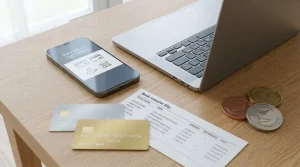
Follow the path from an Australian exchange to a casino wallet, and assess game terms, cash-outs, transfer risks and offshore legality.
For an Australian who already holds SOL, the transfer itself is the short part: you send it from a personal crypto wallet to the deposit address shown by the offshore casino. Getting from AUD to that balance takes a few more steps. Most such casinos do not take AUD by bank transfer or credit card, so the route is generally an Australian exchange, then a wallet transfer, then a SOL deposit.
Before setting anything up, keep the legal position in view. The Interactive Gambling Act 2001 prohibits offshore operators from providing online casino services to people in Australia. The Act targets the operator rather than directly penalising the individual player, but that does not make offshore play legally safe. Australian authorities do not provide recourse if an offshore platform withholds funds or closes.
The first step is opening an account with an Australian exchange that supports AUD deposits and SOL. Swyftx, CoinSpot and Coinbase AU support deposits through PayID or bank transfer. The exchange’s own onboarding and payment steps determine how you fund the account; the conversion to SOL happens there, not at the casino.
If you’re comparing Solana casino options in Australia for 2026, check the available licensing and payment details before deciding where to play. This list gives you a concise reference point based on the information available for each operator.
Rollero Casino
Rollero Casino is listed with a Curacao Gaming Control Board licence, OGL/2023/176/0095, held by Hollycorn N.V.
Playfina Casino
Playfina Casino is operated by Hollycorn N.V. and has been associated with Curacao eGaming since 2017. Its minimum deposit is A$20–30, depending on the offer.
7Bit Casino
7Bit Casino is operated by Dama N.V. and is listed with a Curacao licence.
Golden Pokies
Golden Pokies is listed with a Curacao licence.
WinSpirit Casino
WinSpirit Casino is listed with Curacao eGaming licence OGL/2024/923/0383, issued to Antillephone N.V. Its minimum deposit is A$30.
MrPacho
MrPacho lists crypto payouts at 30–120 minutes and fiat payouts at 24–72 hours. Its minimum deposit is A$30.
Wild Tokyo
Wild Tokyo is listed with a Curacao licence. Its stated payout times are 30–60 minutes for crypto and 1–5 days for fiat, with a minimum deposit of A$10.
Ricky Casino
Ricky Casino lists crypto payouts in under an hour and PayID payouts in 1–3 business days. The minimum deposit is A$20, or A$30 to qualify for the bonus.
Kingmaker
Kingmaker lists crypto payouts at approximately 90 minutes and fiat payouts at 1–5 days. Its minimum deposit is A$30.
DragonSlots Casino
DragonSlots Casino is listed with a Curacao Gaming Authority licence and is operated by Jumpman Gaming Ltd.
Expect the exchange to require identity checks. On-ramp and off-ramp services that convert between SOL and AUD are subject to KYC/AML requirements, so you may need to provide identification before using the service. That is separate from any checks an offshore operator may request later. Keep your exchange details accurate and use an account in your own name; a mismatch can complicate routine account checks.
Once AUD is available in the exchange account, you can place an order to acquire SOL. Check the amount and currency shown before confirming: you are buying a crypto asset, not loading an AUD casino balance. The AUD value of the SOL you receive can change, so the figure you see at purchase is not a fixed promise about what that amount will be worth later.
Next, you need a wallet that can hold SOL and send it on the Solana network. A wallet such as Phantom or Solflare can be used for that purpose. You may send SOL from the exchange directly to the casino’s deposit address if the exchange allows it, or move it first into your own wallet and then onward. Using your own wallet adds a step, but gives you a point at which to check the destination before sending.
At the casino, open the SOL deposit option and copy the address provided for that deposit. Then, in the exchange or wallet, select SOL on the Solana network and paste the address. Check that the asset and network match what the casino displays. A valid-looking address is not enough: sending to the wrong address, or using a mismatched network, can mean the funds are permanently lost. SOL transfers are irreversible.
 Same-Day Payout Casinos in Australia: Payment TimesCompare e-wallet, bank and card withdrawal timing; same-day claims are not guarantees. The Interactive Gambling Act 2001 makes real-money online casino games…
 Instant PayID Withdrawals in Australia: How They WorkLearn why a real-time PayID transfer may not mean an instant cashout, how it compares with other methods, and what can cause…
I treat the final address check as the part not to rush. Compare the first and last characters after pasting, and confirm the amount and network on the sending screen before approving. Do not rely on an old address copied from a previous deposit; use the instructions currently displayed in the account. If any screen gives conflicting details, stop rather than guessing.
After the transfer is sent, the casino balance should reflect the deposit once it has been credited. Keep the transaction record from the exchange or wallet so you can identify the transfer if you need to ask the platform about it. That record is useful for tracing what you sent; it does not guarantee that an offshore operator will resolve a dispute.
The minimum is set by the operator and can differ between platforms. A specialist casino review reports minimum SOL deposits in the range of 0.01 to 0.1 SOL, equivalent to about AUD$2.80–$28 at April 2026 prices. Treat that as a reported range, not a fixed market rule: check the deposit screen for the actual minimum before moving funds. SOL’s AUD value also changes, so the conversion shown for that range is time-specific.
A deposit below the stated minimum may not be credited as expected. On the other hand, sending extra SOL simply to avoid checking the threshold creates more exposure than the transfer requires. Confirm the minimum, destination and asset first, then send only what you have decided you can risk losing. This is setup, not a safety guarantee.
Legal Risk
Offshore operators are prohibited from providing online casino services to people in Australia under the Interactive Gambling Act 2001, and you have no local legal recourse if funds are withheld.
Do not use a VPN to get around access restrictions. An operator may seize an account or funds if it treats VPN use as a breach of its terms. And even when an exchange transfer works exactly as intended, that only confirms the movement of crypto; it does not make the casino lawful to operate for Australian residents or give you Australian consumer protection.
A polished site can make a lot of promises. I would treat “best” as a marketing label, not a safety rating: no offshore Solana casino can be endorsed as safe for Australians. Before you consider any claim, check what it means in practice, what evidence supports it, and what happens if the operator does not honour it.
A licence displayed in a footer is not the same thing as Australian approval. A specialist review of the Australian market reports that, as of mid-2026, no specific licensing framework for crypto-gambling operators has taken shape in Australia. That matters when an offshore operator presents a foreign licence as if it gives you local protection. It does not.
The legal position is more direct than the advertising often suggests: under the Interactive Gambling Act 2001, offshore operators are prohibited from providing real-money online casino games to people in Australia. A foreign licence does not override that prohibition or turn the service into an Australian-regulated casino. And the fact that the Act targets operators rather than directly penalising individual players does not make offshore play legally safe.
 EcoPayz Casino Sites in Australia: What’s VerifiedLearn why a mention of EcoPayz does not confirm operator support, Australian availability or legal status, and why withdrawal speed remains unverified.
 Instant PayID Withdrawals in Australia: What to ExpectLearn how casino approval affects PayID cashout timing, why “instant” starts only after funds are released, and how Osko moves payments in…
So, if a site claims it is “licensed for Australian players”, look for the exact regulator and the precise scope of the licence. Check whether the regulator itself lists the operator, rather than relying on a badge or a copied logo. Then ask the useful question: does that licence give an Australian customer a route to challenge a frozen account or unpaid balance? If the answer depends on contacting an overseas authority, you are not dealing with local recourse.
A welcome offer is only one line in a much longer set of conditions. Before you register or deposit, find the full bonus rules and work out what you must do to make any resulting balance withdrawable. Check the playthrough requirement, which games count and how much they contribute, the expiry time, and any maximum cash-out cap. A generous-looking credit can shrink quickly once those conditions are applied.
I compare offers by considering those terms together, rather than treating the displayed bonus amount as its value. For instance, a strict game contribution rule can make the required play take longer; a short time limit can make it harder still; and a cash-out cap can limit what you keep even if you meet the wagering conditions. The terms should explain how each part works. If the key rules are hard to locate, unclear, or inconsistent across pages, that is a reason to stop rather than guess.
Pay particular attention to which balance you are wagering and what counts toward the requirement. A site may use separate cash and bonus balances, and the rules can restrict withdrawals while bonus conditions remain active. Read the cash-out terms before depositing, not after a win. That is when the fine print is easiest to overlook and most expensive to misunderstand.
For an Australian customer, the central risk is not simply whether the games look convincing. If an offshore operator freezes your account or withholds winnings, you have no legal protection under Australian law for that dispute. Australian authorities do not provide the same complaint route or recovery options you might expect from a locally regulated service. If the platform closes or stops responding, there may be little practical recourse.
That is why I would be cautious about claims such as “fast support”, “fair payouts” or “trusted by players” unless the site explains how those promises can be enforced. A live chat window is not a dispute-resolution scheme. Nor does a positive review prove that a customer can recover funds when the operator disagrees with them.
Be equally careful with review pages that use rankings or recommendations. If a page contains affiliate or promotional links, that relationship should be clearly disclosed. A recommendation may reflect a commercial arrangement, so treat it as a starting point for checking terms, not evidence that an operator is safe.
An operator may request KYC checks, including identity documents, before releasing a larger withdrawal or a bonus-related cash-out. Read the account and withdrawal rules in advance so you know what checks may apply and how the operator says it will handle them. A request made after a win can still delay access to your balance; a vague policy gives you little certainty about what will be accepted.
 PayID Pokies in Australia: Check the CashierCheck PayID in the cashier and assess payment claims, with the legal context: Australian law bars operators from offering real-money online casino…
 Best-Paying Online Pokies in Australia: What Claims MeanSee how the Interactive Gambling Act 2001 distinguishes offshore licences from Australian approval, and assess payout claims, bonus rules and Bitcoin withdrawals.
Also consider what a VPN might mean for your account. Using one can breach an operator’s terms and may result in account seizure and loss of funds. A VPN does not create Australian consumer protection or change the legal position. It can add another reason for the operator to refuse a payout.
My checklist is simple: identify who issued the claimed licence, read every bonus and cash-out condition, look for clear KYC rules, and assume Australian authorities cannot recover funds for you if an offshore platform withholds them. If those checks leave basic questions unanswered, a glossy label will not fix them. No shortcut.
Buying, holding and transferring SOL are legal in Australia. The legal issue is what an offshore operator does with it. Sending cryptocurrency does not change the nature of the service: if an overseas business offers real-money online casino games to people in Australia, the Interactive Gambling Act 2001 prohibits that service.
That distinction matters. A SOL transfer is a crypto transaction; using the balance to play casino games is a separate activity. Calling a site a “Solana casino” or describing its games as crypto-based does not put it outside Australian gambling law. The rule applies to the operator providing the service to people here, regardless of whether the balance is held in SOL rather than Australian dollars.
The Act is directed at operators, not individual Australian players. Players are not directly penalised under it simply for using an offshore casino. That is not the same as approval, a guarantee of safety or a finding that offshore play is lawful. The service remains prohibited for the operator, and a lack of direct player penalties does not make using the site legally safe.
ACMA Prohibition
The Australian Communications and Media Authority (ACMA) maintains a Gambling Prohibition Register of unlicensed offshore sites that may be blocked.
There is a practical consequence too: the Australian Communications and Media Authority (ACMA) enforces the Act and can seek to block unlicensed offshore gambling websites. A site that loads today may not remain accessible. A block can interrupt access to an account, but it does not settle a dispute over a balance or give you a local route to recover money from the operator.
ACMA’s public Gambling Prohibition Register lets you check which gambling websites have been subject to prohibition action. A specialist review reported that the register listed more than 200 unlicensed gambling sites in 2026. Treat that count as a time-specific report, not a complete or permanent inventory: the register can change, and absence from it is not evidence that a casino is approved for Australian residents. A listing is a useful warning; it is not a consumer-protection scheme.
This is where the “grey zone” shorthand can mislead. It describes the distinction between a player’s position and an operator’s prohibition; it does not mean the service sits in a safe legal gap. Offshore casinos do not become locally authorised because they accept Australian customers, use a foreign licence, or process deposits on Solana. Nor does a successful deposit establish that you will be able to withdraw later.
There is also little practical protection if an offshore operator freezes an account, withholds winnings or closes. Australian authorities do not provide the same recourse against an offshore casino that you might expect from a locally regulated service. KYC checks may also arise, including on larger withdrawals or bonus cashouts, leaving access dependent on the operator’s own decisions and terms.
I would not treat a VPN as a workaround. It may breach a platform’s terms and can lead to account seizure and loss of funds; it does not change the Australian legal position. Keep the distinction clear: holding or transferring SOL is lawful, while offshore operators are prohibited from supplying online casino games to Australian residents. No direct penalty for the player is not a green light.
A slot bonus can look larger on the screen than it is in practice. The key is whether the amount is withdrawable cash or bonus funds that must first be played through. With a wagering requirement, eligible bets count toward a target; until that target is met, winnings tied to the bonus may remain unavailable for withdrawal.
Slots can count fully toward that target, while table games such as blackjack or roulette may count at a reduced rate. The difference affects how much eligible play is needed. If a slot bet contributes in full, the whole bet counts. If a game contributes only a fraction, only that share advances the requirement. A displayed progress bar can therefore move at different speeds depending on what you play.
That does not make a slot offer automatically good value. The requirement still has to be completed, and the funds can be exposed to losses along the way. I would read the wording as a calculation, not a promise: identify the bonus amount, find what it is multiplied by, then check which games count and at what rate.
A specialist review describes one offer with a 35x requirement applied to the bonus only. That distinction matters: a requirement based on the bonus is calculated differently from one based on a combined deposit and bonus. The review’s figure is an example of a particular offer, not a standing rule for Solana casino sites. Terms can differ, so use the written conditions attached to the offer you are considering.
Calculating Wagering
Identify the target
Determine the bonus amount and multiply it by the wagering requirement (e.g., 5 SOL bonus × 40x = 200 SOL turnover).
Check contributions
Verify which games count fully toward the target and which count at a reduced rate.
Evaluate the risk
Consider the house edge, as repeated betting exposes the balance to losses before the target is met.
Free spins need their own check. A specialist review notes that winnings from free spins may be placed in bonus funds rather than added as cash, with a separate wagering condition. It cites a 50x requirement as an example. So a spin can produce a visible win without producing an immediately withdrawable balance. Check whether the win is credited as cash or bonus funds, and whether a separate target applies.
The practical trap is reading “free” or “bonus” and stopping there. A bonus balance can be conditional, and the slot’s contribution rate only tells you how play counts; it does not tell you whether the offer is easy to complete or what you can ultimately withdraw. Keep those questions separate.
Before activating an offer, look for the exact wagering basis and game contribution table. Confirm whether the requirement applies to the bonus alone, whether free-spin winnings have separate terms, and which games advance progress. If the conditions are unclear, the headline amount is not enough to judge the offer. A number on a screen is not cash in your wallet.
The phrase “NFT casino” can mean several different things, and the label alone tells you very little. It might refer to a digital collectible, a token said to unlock a feature, or simply a casino website using NFT imagery. Those are not interchangeable. A picture of a token is not proof that an NFT exists on-chain, belongs to a player, or does anything useful inside a gaming account.
 Bitcoin Casinos in Australia: Payments, Rules and RisksLearn how Bitcoin deposits are recorded, why a casino balance is separate from the blockchain, and what to check around games, bonuses…
 Bitcoin Pokies in Australia: How They WorkLearn how free-play credits differ from funds at risk, how Bitcoin payments move, and where offshore services may leave Australian players with…
I would separate the claim into parts before treating it as a real feature. What token is involved? Is there a public record on a blockchain that can be checked? Does the operator explain what holding it is supposed to provide, and how that benefit works? Can you see whether the token is held in your own wallet or only shown in an account interface? If the explanation stops at “NFT benefits,” you still do not know what is being offered.
There is also a difference between owning an NFT and having a casino balance. A token may be collectible without being accepted for deposits, and a platform may accept cryptocurrency without offering NFT-based access or rewards. Do not assume one follows from the other. If a claim links an NFT to bonuses, access, or cash value, the actual terms would need to explain the connection; the label itself settles none of it.
One crypto-payment detail is more concrete. A specialist review reports that some platforms accept USDC on Solana for deposits and play, rather than limiting balances to SOL. That is a statement about a supported currency and network, not evidence of an NFT feature. Check the platform’s own payment instructions before acting: support for USDC on Solana does not mean every token, wallet, or network is supported.
That distinction matters because familiar language can make a feature sound more definite than it is. “NFT casino” may describe a genuine token arrangement, a marketing label, or something unrelated to how deposits work. The useful question is not whether the word appears on a page, but whether the specific token and its stated function can be independently understood.
NFT Claims
Attention: A label like "NFT casino" is often a marketing term; verify if a token exists on-chain and what specific function it serves before assigning it value.
I would not send funds, connect a wallet, or assign value to a promised perk based on NFT wording alone. A claim should make clear what asset is involved and what, if anything, it changes for the user. Keep the payment question separate: USDC on Solana may be accepted by some platforms, while an NFT feature is a distinct claim that needs its own evidence. A label is not a feature.
The clearest payment-side advantage of Solana is the network fee. The average transaction fee is about US$0.00025, so the network charge itself is effectively negligible for an ordinary transfer. That can make moving a crypto balance between a wallet and a casino less costly than using a network with higher fees. It does not mean every part of the payment is free: the casino’s own terms and any service used around the transfer are separate from Solana’s network charge.
That distinction matters when comparing a SOL balance with other crypto options. A low network fee tells you what the blockchain charges to process a transaction; it does not tell you whether an operator adds its own charges, what exchange rate it uses for a displayed balance, or what conditions apply to a withdrawal. Read those terms before sending funds. Near-zero fees are useful, but they are not a substitute for clear rules.
Some operators may also accept USDC on Solana, rather than limiting deposits and play to SOL. A specialist review reports that this option exists, but it should not be treated as a feature available at every casino. Check the deposit screen and the terms for the specific platform before you assume it accepts USDC, and confirm that the token and network match exactly. A token sent through the wrong network may not arrive as intended.
Using USDC instead of SOL changes the asset held in the casino balance; it does not make the operator more trustworthy or change the legal position for Australian residents. The Interactive Gambling Act 2001 prohibits offshore operators from providing online casino services to people in Australia. A payment method is not a legal workaround.
Keep wallet transfers deliberate. SOL transfers are irreversible, so a wrong address can mean permanent loss; check the destination and network before confirming. I treat a tiny transaction fee as a small convenience, not as a reason to send more than I can afford to lose. And if a platform’s payment instructions are unclear, stop there. A cheap mistake is still a mistake.
A dice result and a wallet transfer are two different things. The first belongs to the casino’s game system; the second is recorded on Solana. A quick network confirmation tells you that a transaction has been processed on-chain. It does not tell you whether an offshore operator has credited your account, accepted a bet or approved a payout.
A specialist review reports Solana transaction confirmation at about 400 milliseconds, with balances updating immediately. Treat that as a description of the network, not a promise about every casino screen. The operator still has its own systems between the blockchain and the balance you see. If a deposit appears late, refreshing the page repeatedly will not make the casino’s ledger catch up.
The useful distinction is simple: blockchain confirmation is not the same as an operator decision. A transaction can be confirmed while a platform’s balance display or internal processing is still catching up. Check the transaction status in your wallet or on a Solana block explorer, then compare the destination address and amount with the casino’s instructions. Do not send a second transfer just because the first has not appeared in the account view.
I would also treat the address as a one-way door. SOL transfers cannot be reversed; if you send funds to the wrong address, they may be lost permanently. Copying an address carefully is dull, but less expensive than learning the lesson the hard way.
And the speed of the chain says nothing about the fairness or odds of any dice game. I’m not treating fast confirmations as proof of a trustworthy game or operator. In Australia, the Interactive Gambling Act 2001 prohibits offshore operators from providing online casino games to Australian residents. A lack of direct player penalties does not make offshore play legally safe, and Australian authorities offer no recourse if an operator withholds funds.
Using a VPN may also expose you to account seizure and loss of funds. Keep the distinction clear: Solana can confirm a transaction quickly; it cannot make an offshore casino answerable to you. Fast chain. Different problem.
A bonus balance can look like extra SOL to play with, but it is not automatically cash you can withdraw. Winnings generated from bonus funds must be wagered with real money before a cash-out is allowed. The offer’s displayed value therefore tells you little on its own: the key question is what you must do to turn any resulting winnings into withdrawable funds.
Start with the wagering requirement and check what it applies to. A specialist review gives the example of a 5 SOL bonus with a 40x requirement: that means 200 SOL in bets before withdrawal. That is turnover, not a promise that you will finish with 5 SOL—or with anything. Each bet exposes your balance to the game’s house edge, so you can lose the funds before completing the requirement. A large target can make a bonus poor value even when the headline amount seems generous.
The house edge matters because repeated betting is not financially neutral. For instance, a 4% edge means the game is structured to retain part of the amount wagered over time. It does not predict the result of any individual bet, but a high wagering target can require substantial play while your balance is at risk. Treat the bonus as conditional play credit, not a guaranteed gain.
Read the cash-out terms before depositing, not after winning. Check whether the wagering target applies to the bonus, the bonus plus your deposit, or another defined amount; whether bonus winnings have to be played through separately; and whether the operator can cancel the bonus if you break a rule. Also look for a maximum cash-out, an expiry condition, or game restrictions. These details can determine whether completing the target leaves you with withdrawable funds at all.
Keep your own record of deposits, bets and remaining wagering. If the account shows a bonus balance separately from cash, do not assume that amount can be withdrawn. And do not increase your stake just to clear a target faster: it can also speed up losses.
There is no Australian endorsement implied by a bonus or a polished game lobby. The Interactive Gambling Act 2001 prohibits offshore operators from providing online casino games to Australian residents. If an offshore operator withholds funds or closes an account, Australian players have no legal protection under Australian law. A bonus is not worth treating as money in hand.
A gambling win and the crypto used to make it can sit in different tax categories. In Australia, winnings from recreational gambling are generally not taxable as income. That does not mean a win paid in SOL is automatically free of tax consequences: the Australian Taxation Office treats cryptocurrency as an asset for capital gains tax purposes, and profits from gambling with SOL can be subject to CGT.
That distinction is easy to miss when your account shows a single token balance. The number of SOL may stay the same while its Australian-dollar value moves. If you later exchange or otherwise use that SOL, the value of the asset matters; a casino balance is not a fixed AUD amount. Keep records of what went in, what came out and the relevant values in Australian dollars, rather than relying on a wallet screen months later.
I would not treat every gambling loss as a tax deduction against a crypto gain, either. A specialist tax commentary notes that offsetting gambling losses against gains depends on the player being recognised as a professional gambler. That is a demanding threshold, not a label you can choose because you play often or keep detailed records. For a recreational player, losses should not be assumed to cancel out gains for tax purposes.
The practical headache is the gap between winning and converting. SOL can rise or fall while you hold it, so the AUD value of a win at withdrawal may differ from its value when credited. A larger token balance is not necessarily a larger cash result. Price movement can also make it harder to understand what you have actually gained across several deposits and payouts.
Keep your own transaction history and seek advice from a qualified Australian tax professional if the amounts or circumstances are significant. The tax treatment depends on how your activity is classified and how the asset is dealt with; a casino’s description of a “profit” does not settle that question. Crypto adds another moving part. That’s the catch.
A Solana transfer can settle quickly without your casino withdrawal being quick. A specialist review reports native SOL withdrawals taking 30–60 seconds on competent platforms, but that describes the network transfer after release—not the casino’s approval process. An operator-comparison review puts automated processing at 5–15 minutes and manual processing at as long as 72 hours. These are reported timings, not a promise about any particular withdrawal.
Before depositing, read the cash-out terms and check what may delay or block a payment. Larger withdrawals and bonus cashouts may prompt KYC checks, including a request for ID. If you cannot complete those checks, or the operator withholds the funds, Australian authorities provide no recourse for recovering money from an offshore casino. Offshore operators are prohibited under the Interactive Gambling Act 2001 from providing online casino games to Australian residents; the absence of direct player penalties does not make using one legally safe.
Treat the wallet address as exact. SOL transfers cannot be reversed, so a typo or the wrong destination can mean permanent loss. A fast network cannot fix a mistaken transfer, and it cannot force an operator to release funds.
Also account for SOL’s changing AUD value: winnings can be worth less by the time you withdraw than when you won them. Keep your own record of the amount requested, the destination address and the transaction status, and do not assume a pending casino payment has reached your wallet. If the operator closes or freezes your account, a blockchain transaction record is not a substitute for consumer protection. Check first. Clearly.
You can buy SOL with AUD through an Australian exchange, transfer it to a Solana-compatible wallet, then send it to the casino’s SOL deposit address. Check the asset, network and minimum deposit before sending, as transfers cannot be reversed.
The Interactive Gambling Act 2001 prohibits offshore operators from offering online casino services to people in Australia. The Act targets operators rather than directly penalising players, but Australian players have no legal protection if an offshore casino withholds funds.
Yes, some Solana casinos accept USDC on the Solana network as well as SOL. Check the casino’s deposit options and make sure the asset and network match before sending.
The Interactive Gambling Act 2001 prohibits overseas operators from offering online casino services to Australian residents. ACMA enforces the Act, including by blocking unlicensed offshore gambling websites.
Solana transfers have an average network fee of about US$0.00025 and can confirm in about 400 milliseconds, but transfers are irreversible. Getting SOL usually means buying it with AUD on an exchange first, since most Solana casinos do not accept direct AUD deposits.
They may be, but check the wagering requirement, which games count toward it, the time limit and any maximum cashout cap before accepting. Bonus funds and free-spin winnings can have separate wagering conditions before you can withdraw them.
Usually not: most Solana casinos do not accept AUD deposits by bank transfer or credit card. You generally need to buy SOL with AUD on an Australian exchange and transfer it to the casino.